Informacje

O czasopiśmie Postępy Astrobiologii

„Postępy Astrobiologii” to oficjalne, recenzowane czasopismo Polskiego Towarzystwa Astrobiologicznego, stanowiące platformę wymiany myśli o pochodzeniu, ewolucji i granicach życia we Wszechświecie. Publikujemy w modelu otwartego dostępu (Open Access) i w trybie ciągłym, gwarantując autorom sprawny, transparentny i rzetelny proces recenzyjny.

Aktualności

Najświeższe informacje o nowych artykułach.

Wydarzenia naukowe

III‑2025

Uniwersytet Warszawski

Warszawa online

IV‑2025

Politechnika Gdańska

Gdańsk

V‑2025

Instytut PAN

Olsztyn

VI‑2025

Centrum Kopernika

Toruń

VII‑2025

Centrum Nauki

Łódź online hybrydowo

VIII‑2025

Konferencja PTAstro

Poznań

IX‑2025

Obserwatorium Kraków

Kraków

X‑2025

Planetarium Śląskie

Chorzów

XI‑2025

Uniwersytet Jagielloński

Kraków online

Astrobiologia w polskim wydaniu

Łączymy społeczność badaczy życia we Wszechświecie, udostępniając wyniki badań w otwartym dostępie i promując najwyższe standardy etyczne publikowania naukowego.

Zespół redakcyjny

Adrian Macion – Redaktor Naczelny

Interdyscyplinarny badacz z wykształceniem w zakresie biotechnologii, chemii i mikrobiologii molekularnej (Uniwersytet Warszawski, Universitat Politècnica de València). Jego zainteresowania naukowe koncentrują się wokół biologii molekularnej chorób zakaźnych, biochemii drobnoustrojów oraz mechanizmów adaptacyjnych ekstremofilów. Współautor artykułów w międzynarodowych czasopismach Q1. Skarbnik Polskiego Towarzystwa Astrobiologicznego oraz doświadczony manager akademicki, zaangażowany w popularyzację nauki i open science.

Igor Lipiński – Zastępca Redaktora Naczelnego

A clean, photographic realism image of a digital planetary habitability map displayed on a large, frameless screen in a dim, professional research environment. The map shows multiple exoplanets as colored, featureless spheres arranged against a dark, starfield background, each with subtle gradients indicating temperature zones and potential liquid water bands, but no text or labels. Cool, low ambient lighting in the room emphasizes the glow of the screen, casting soft reflections on a nearby dark matte work surface with a closed notebook and pen silhouette. Shot from a slightly off-center, eye-level angle with moderate depth of field, the mood is focused and analytical, supporting educational content about comparative habitability and astrobiology. Alt text: glowing screen displaying a colorful exoplanet habitability map in a dark research room.
Photorealistic view through a spacecraft window looking down on a potentially habitable ocean exoplanet. The planet fills most of the frame, showing deep blue global oceans, scattered archipelagos, and swirling white cloud systems, all bathed in soft, white starlight. The interior window frame is a dark, brushed metal with small, out-of-focus instrument lights along the edges, but no readable text. Lighting inside the craft is dim, accentuating the bright, detailed planetary disk outside. Captured from an eye-level perspective with sharp focus on the planet and gentle blur on the window frame, the composition suggests quiet observation and scientific curiosity, ideal for illustrating exploration themes in astrobiology. Alt text: view from a spacecraft window of a blue ocean exoplanet with clouds and islands.
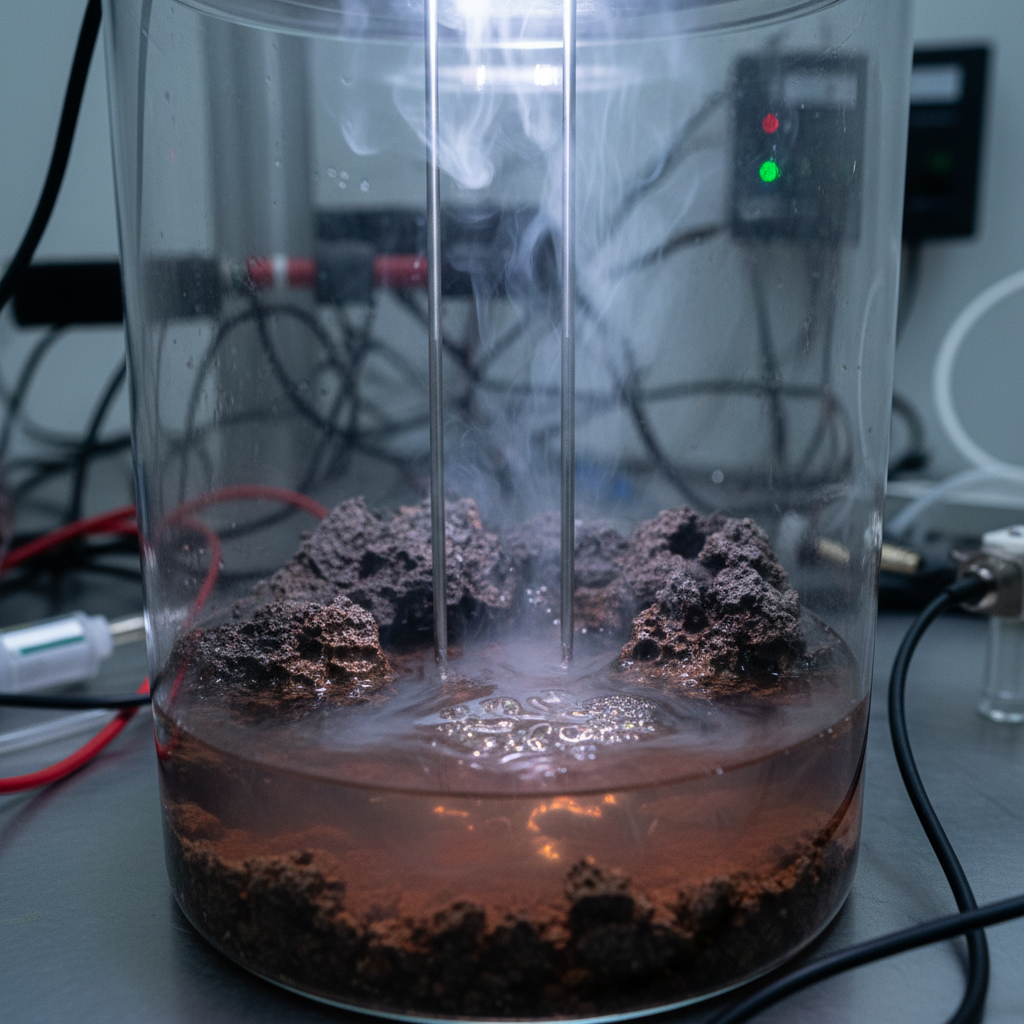
A detailed, photographic realism image of a controlled environment chamber simulating an early Earth atmosphere. Inside a clear glass cylinder, a shallow pool of murky water sits above dark volcanic rocks, with faint wisps of vapor rising. Thin electrodes dip into the chamber, their metallic surfaces catching the cool white laboratory lighting from above. The surrounding equipment is softly blurred, with cables and sensors visible but without any readable labels. Shot from a slightly elevated angle with medium depth of field, the focus remains on the water surface where tiny, shimmering organic-like films begin to form. The mood is methodical and experimental, suited for content on origins of life and prebiotic chemistry. Alt text: glass chamber with water, rocks, and electrodes simulating early Earth conditions in a lab.

Newsletter

Otrzymuj powiadomienia o nowych publikacjach.

Kontakt z redakcją

W sprawie zgłoszeń artykułów, recenzji lub współpracy prosimy o kontakt z redakcją drogą mailową.

← Wstecz

Dzięki za odpowiedź. ✨